SDG 15: LIFE ON LAND

Protecting, restoring, & promoting sustainable use of terrestrial ecosystems, sustainably managing forests, combating desertification, & halting & reversing land degradation & halting biodiversity loss is the purpose of Sustainable Development Goal 15 (SDG 15). This goal strives to preserve biodiversity & increase eco-centric behaviors.

Actions, stories, & resources related to SDG 17: Partnerships for the Goals are shared in our latest Auburn University and the United Nations Sustainable Development Goals report. They are shared below to illustrate Auburn’s impact. They are shared below to illustrate Auburn’s impact. For an overview highlighting our commitment to the Sustainable Development Goals (SDGs), please visit aub.ie/sdg.

Sustainable Development Goals Logo

SDG 15: LIFE ON LAND

To protect the air we breathe, the water we drink, and the food we eat, sustainably managing forests, desertification, land degradation, and biodiversity loss is crucial. Biodiversity is essential for climate change adaptation and natural disaster risk reduction, but biodiversity is decreasing more rapidly than any other time in human history.

Auburn University is highly engaged with Goal 15 across a variety of categories; most notably through teaching activities, with at least 195 courses offered from 2019-2021. Sustainability-oriented classes, undergraduate degrees, immersion programs, and research at Auburn University are best represented through Goal 15 at 195 classes, 7 undergraduate degrees, 4 immersion programs, and 66 faculty conducting research. Auburn University is a land-grant institution with strong teaching, outreach, and research within the realm of forestry, agriculture, horticulture, and more. Auburn University is a direct stakeholder in local, statewide, national, and global land health because of the investments the university has made in forests, farming, soil health, and ecosystems at these levels, making Goal 15 a direct concern of this institution.

View our most recent Auburn University and the United Nations Sustainable Development Goals report  for an overview of Auburn’s contributions to all the SDGs.

Actions at Auburn

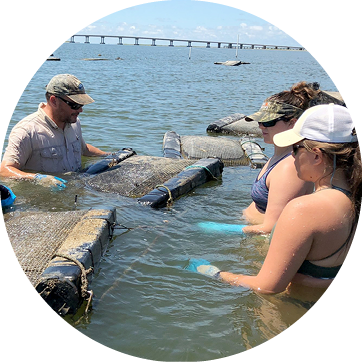
Auburn University features three concentrations for the Organismal Biology Major: Conservation Biology; Ecology, Evolution, and Behavior; and Integrative Biology. Housed in the College of Science and Mathematics, the Organismal Biology degree focuses on the preservation and conservation of diverse biota from a species level to a community level. Many students become involved in the AU Society for Conservation Biology in order to network with their peers and develop professional goals. Students also complete an immersive internship and participate in various undergraduate research opportunities, particularly with the Organization for Tropical Studies and the Dauphin Island Sea Lab.

Dauphin Island Sea Lab
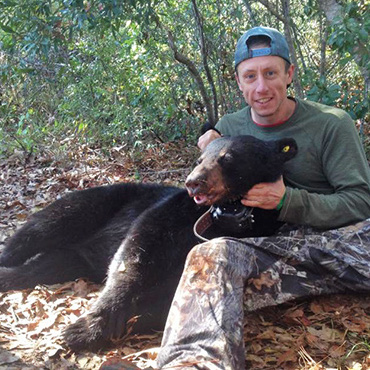
student with bear sdg Photo courtesy of School of Forestry and Wildlife Sciences

The Wildlife Ecology and Management degree program in the College of Forestry Wildlife and Environment provides a broad biological education that is specifically designed to meet the needs of students interested in careers involving wildlife ecology, management, and conservation. Students are exposed to field experiences through outdoor labs and work opportunities and are trained to address issues involving free-ranging wildlife populations. People with wildlife science backgrounds are needed to work in overseeing our natural resources, managing habitats for rare or endangered species, supervising game species for sustainable harvest, and ensuring everyone observes sustainable practices that keep our natural resources available for all to enjoy.

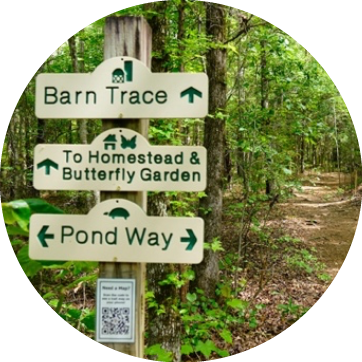
Directional sign at Kreher

The Kreher Preserve and Nature Center’s (KPNC) mission is to “promote a sense of stewardship toward nature through quality environmental education, recreation, and outreach programs with Auburn University and its community partners.” Through various programs, camps, and educational sessions, the KPNC helps to educate the general public and upcoming leaders to appreciate the value of native species in an ecosystem. Comprised of 120 acres, the center provides an amphitheater, interactive check points, and a community garden. The KPNC welcomed a record-breaking number of visitors during the COVID-19 pandemic, with more than a 30 percent increase during summer 2020, many of them first time visitors.

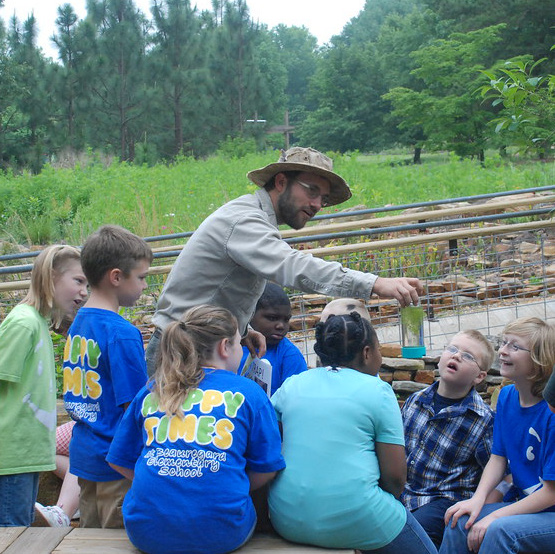
The Donald E. Davis Arboretum is a 13.5-acre botanic garden facility supported by the College of Sciences and Mathematics. It provides visitors with a place to enjoy a natural setting and experience the native plants and habitats of Alabama. The Arboretum functions as a plant museum and has at its core a living collection of scientifically ordered plants with provenance documentation. It functions as an outdoor classroom for university classes, local schools, and community groups. The primary purposes of the Arboretum are conservation, education, and research. The Arboretum also uniquely works to protect the campus’ natural resource areas, which fulfills AU’s sustainability objectives.

Arboretum staff teaching children sdg Photo courtesy of Davis Arboretum

Housed in the College of Forestry, Wildlife and Environment, the Tree Physiological Ecology Lab studies how stimuli affect tree populations and examines heatwaves and climate impacts on such ecosystems. The lab has the objective to “inform predictions of species and ecosystem responses to environmental change”, “inform sustainable management of grassland and forest ecosystems,” and “provide data for improving our quantitative and predictive understanding of physiological responses to environmental change, and their representation in process-based models.” The use of glasshouse studies and large chambers helps to measure ecosystem resiliency in the face of the modern climate crisis.

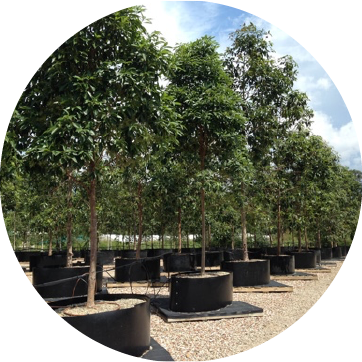
Tree nursey
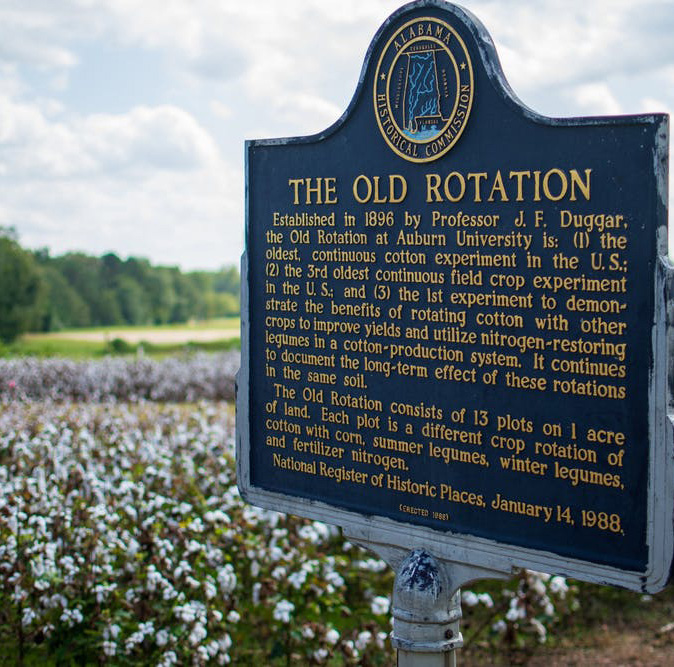
sign from the old rotation sdg Photo courtesy of Joshua Fisher

The “Old Rotation,” managed by the College of Agriculture, is the oldest continuous cotton experiment in the world. The “Old Rotation” was one of the first experiments to demonstrate and document the value of rotating cotton with other crops and including nitrogen-restoring legumes in the system. Information from this test provided evidence that rotation with legumes could sustain and actually improve yields of cotton and corn in Alabama soils. This experiment has supported research on productivity, soil and environmental quality, and sustainable agriculture. This experiment demonstrates that sustainability has been a fundamental element of Auburn University’s teaching, research, and outreach from the beginning.

People & Stories

Blog post title: It’s Not Dirt, It’s Soil: Kiss the Ground Outdoor Film Screening

| Sustainable Development Goal 15, Sustainable Development Goal 17 | No Comments
By Emily Moore* Sitting on a picnic blanket in the Langdon Courtyard, I gaze up at the night sky through the branches of a tree. Twinkling stars and a radiant moon shine down, providing ample light to the gathering below. People are sipping on tea and snacking on popcorn, and, on the screen in front…

Blog post title: Nature & Becoming You

| Sustainable Development Goal 14, Sustainable Development Goal 15, Sustainable Development Goal 17, Updates | No Comments
Nature has a special way of affecting everyone uniquely. To demonstrate this, we asked some of our staff around the office how time in nature has helped them in becoming themselves. COLE BEDICS  The Tallapoosa River is a place that I like to go when I have the whole day to myself. I…

Blog post title: Jamie Johnson’s Experience with Karen Pryor Academy Comprehensive Dog Trainer Program

| Guest Posts, Professional Development, Sustainability in Action, Sustainable Development Goal 15, Sustainable Development Goal 4 | No Comments
By Jamie Johnson* Last year I was given the opportunity to complete the Karen Pryor Academy Comprehensive Dog Trainer Program, and to sum it up, it has completely changed my outlook. I was interested in taking this course for several reasons and I am happy that I did. For starters,…

Blog post title: Growing a Greener Auburn: Native Plants Take Root

| Sustainable Development Goal 11, Sustainable Development Goal 15, Sustainable Development Goal 4 | No Comments
By Emily Moore, Outreach Coordinator In February, the College of Architecture, Design, and Construction’s rain garden went from drab to fab. Although the Office of Sustainability typically hosts an annual tree-planting event at an off-campus natural area, we have always wanted to implement a similar project on Auburn’s campus. Hence,…

Blog post title: Food & Dining Assessment: Auburn University’s STARS Report

| STARS, Sustainable Development Goal 12, Sustainable Development Goal 14, Sustainable Development Goal 15, Sustainable Development Goal 2, Sustainable Development Goal 3 | No Comments
By Bella Wright  Food is essential to the survival of all living beings on our planet. How this food is grown, processed, and distributed significantly impacts the environment. Auburn University has extensive dining services across campus, offering a variety of choices for nutrition and dining. Where food on campus is…

Explore the SDGs & AU