
A small battery can make a big difference. For 10 years, Auburn University’s Battery Recycling Program has helped create a safer and more sustainable campus by giving used batteries a responsible path beyond the trash. While the campus-wide program has grown over the past decade, its story began even earlier. In December 2010, Michael Freeman with Risk Management & Safety (RMS) created the original battery recycling program, starting with just two collection locations in high-traffic areas of campus. Several years later, the program expanded through a partnership between RMS and the Office of Sustainability, growing into the campus-wide program it is today.
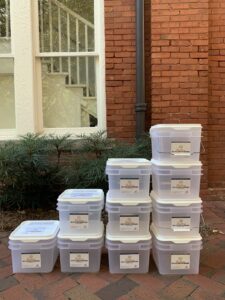
These are the battery recycling buckets you can find all around campus!
Since 2016, Auburn has collected more than 105,600 pounds of batteries through the program, equivalent to more than 52 tons of batteries. So far in 2026, we have collected 13,092 pounds, while 2023 was our largest collection year, with 27,484 pounds collected. Today, the program reaches approximately 126 locations across campus, including Ross Hall, Funchess Hall, Haley Center, and Lowder Hall, which are among the locations that collect large amounts of batteries. Each collection contributes to a larger campus-wide effort to responsibly manage used batteries.
Behind these numbers is a hands-on process that takes place throughout the academic year. Each year, one student staff member serves as the Battery Recycling Program Coordinator, helping manage monthly pickups, weighing, sorting, tracking, and other day-to-day responsibilities. Once a month, the Office of Sustainability picks up batteries from collection locations throughout the core of campus. RMS also picks up battery collection along the perimeter of campus, at Auburn University College of Veterinary Medicine, and in areas outside of the campus core. After collection, the batteries are weighed and sorted before being packaged for shipment to a recycling center. The Office of Sustainability works closely with RMS throughout the process, with the two teams meeting to sort and package the batteries before they are transported to ViaTek, the recycling vendor.
This collaboration is especially important because many battery types have hazardous properties and require proper handling, packaging, transportation, and disposal. Some batteries, including lithium-ion and lead-acid batteries, can pose significant safety risks if handled incorrectly. Through the partnership between Sustainability and RMS, Auburn can manage batteries responsibly while helping keep toxic materials such as lead, cadmium, nickel-metal hydride, and lithium from entering the environment.
For Freeman, who has been involved with the program since its beginning, one of the most rewarding parts has been seeing the partnership develop over the years. He describes it as “the well-oiled machine that has been created through partnership between the Office of Sustainability and the Department of Risk Management and Safety.” He also emphasizes that battery recycling is a shared responsibility. The program’s growth from two collection locations to approximately 126 today demonstrates what can happen when the Auburn community works together toward a common goal.
As we celebrate 10 years of the campus-wide program, we look forward to continuing to expand access to battery recycling and strengthening the resources that make the program possible. Visit the Battery Recycling Program page to find a collection bin near you. The page includes a list of current bin locations by building and room, as well as information about accepted batteries and how to request a new bin for your space. Auburn faculty and staff can use the program to recycle batteries generated through university operations, while students living in on-campus residence halls can participate through designated collection locations. If your building does not have a bin, consider requesting one and becoming part of Auburn’s next decade of battery recycling.
10 years. 105,600+ pounds. 126 locations. One Auburn community. Together, we are powering a more sustainable Auburn, one battery at a time.
Written By Yarianna Rangel.