
By Micheal Freeman*
On July 13th, 2025, I traveled (supported by the Auburn University Office of Sustainability) to Duke University to take part in the College Sports in Sustainability Conference. I presented on the need to properly manage vape pens collected on college campuses during athletic events.

Micheal Freeman presenting at the College Sports in Sustainability Conference
Vape pen use is a significant public health issue, with 4.5% of U.S. adults and 5.9% of middle and high school students reporting current use in 2021 and 2024, respectively. Youth-use is a major concern, with flavored vapes being highly popular and daily use being common among teens. The prevalence varies by age, with young adults aged 18-24 and 23-24 showing the highest rates. My presentation highlighted facts about increased use over traditional cigarettes, but it wasn’t about the use of vape pens. It was about the need to properly manage and dispose of the pens once received as waste.
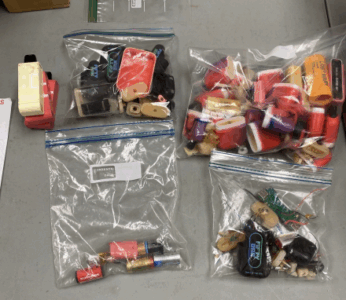
A collection of vape pen parts to be recycled
Vape pens are unique, in that they contain three components that should be managed once collected. Number one, they contain Nicotine, a P-listed, toxic chemical required by the EPA to be managed. Secondly, vape pens contain rechargeable batteries (mainly lithium) to fire up the process that changes the liquid into a vapor. Rechargeable batteries must be managed as universal waste. Finally, each vape pen houses an electronic board, which can be recycled and must be managed as E-Waste.

Components of a vape pen to be recycled
We learned that most universities haven’t picked up the need to manage these devices, which opens them up for potential regulatory compliance issues. It also shows a need to recycle E- Waste and the batteries, which provide an opportunity to enhance sustainable practices on college campuses. My hope was to provide information that could lead to enhanced management of vape pens at the college events. I believe it is important to advance the Auburn mission through education and collaboration.
This conference provided athletes, administrators, and staff a chance to present some of their successes while also shedding light on the need for increased student sustainable practices across collegiate athletics. Duke University provided a great venue for this event, leading us on tours of the campus and showcasing some of the great things they do to support sustainability. Other institutions like Stanford University, NC State, and the University of Tennessee shared insight on the fantastic programs they have to support our fellow men and women.
*Micheal Freeman serves as an Environmental Health and Safety Specialist at Auburn University’s Risk Management and Safety Department and is the recipient of the Sustainability Professional Development Sponsorship Award.