
Discover all the ways to recycle, get, or donate used items on campus. Learn which units manage which items and how you can take action! If you know of another waste stream managed on campus that is not covered here, please let us know.
Reducing, Reusing, & Recycling |
Resources
General Recycling How-To
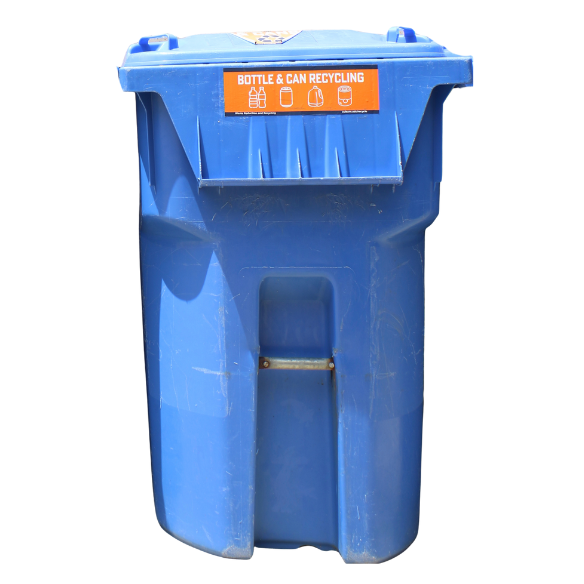
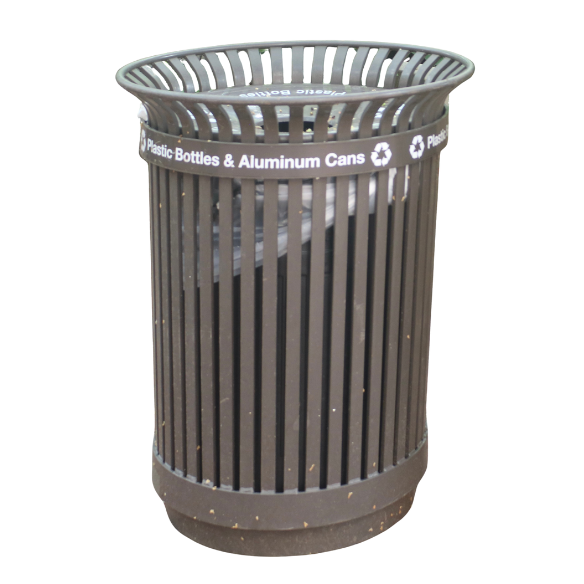
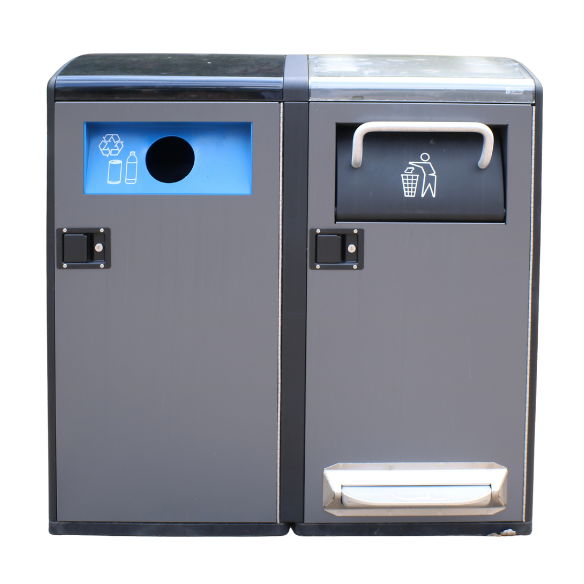
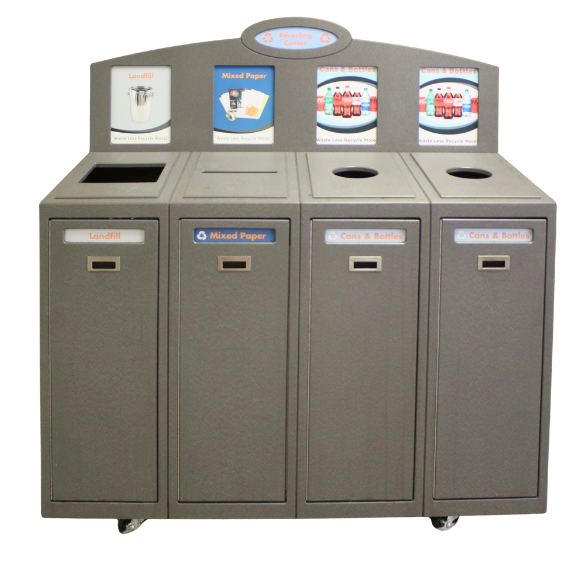
Rinse containers and remove food or liquids before recycling. Place only clean, dry items in the correct bins. The following types of items can be placed in the general recycling service bins on campus. Be sure to check the bin labels to place the right item in the appropriate bin.
- Paper: Office paper, newspapers, magazines, and paperboard (e.g., cereal boxes)
- Plastic: Bottles, jugs, and cups
- Aluminum: Drink cans
- Tin/Steel: Food cans (e.g., soup or vegetable cans)
The pictures show examples of the bins you’ll find in or around nearly every building on campus for paper, plastic, aluminum cans, and tin/steel cans.

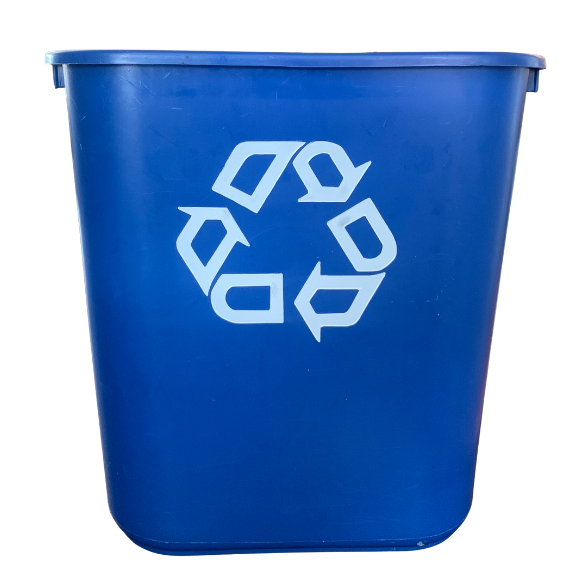
Items to Reuse or Recycle on Campus
Below, you will find where to take each material and which department handles it. If you have questions, please contact the responsible department.
Aluminum
Look for bins inside and outside campus buildings. Contact WRRD for more information.
Appliances
Appliances from campus operations can be sent to Asset Management for resell or recycling.
Batteries
Look for clear buckets with white lids located in over 70 campus locations. Find a location near you on the Battery Recycling webpage.
Cardboard
Recycle flattened cardboard in the blue dumpsters outside most campus buildings.
Clothing
Contact the AU Campus Career Closet to donate professional attire.
Electronics
Asset Management will collect unwanted electronics to be either resold or recycled. If your electronic stores data, it will need to be approved for disposal by OIT prior to sending to Asset Management.
Food – Leftovers and Unserved
Leftover food can be shared on the ShareMeals app and unserved food can be donated to Campus Kitchens.
Furniture
Furniture from campus operations can be sent to Asset Management for resell.
Glass – General
Glass containers may be recycled in bins at limited locations on campus. Contact WRRD for more details.
Glass – Laboratory
The Office of Sustainability collects unwanted laboratory glassware for reuse within the sustainable labs program.
Hazardous Materials
Contact RMS for proper disposal procedures. When feasible, RMS recycles materials they receive.
Ink & Toner Cartridges
Ink & toner cartridges can be recycled in specially marked bins or through the university mail system. Contact WRRD for details.
Laboratory Equipment
Lab equipment from campus operations can be sent to Asset Management for resell.
Medicine
Unused or expired medications for people & pets may be dropped off at the AU Employee Pharmacy for proper disposal.
Pallets
Contact WRRD to arrange pick up of your unwanted pallets to be reused or recycled.
Paper – Mixed
Look for bins inside and outside campus buildings. See above or contact WRRD for details.
Paper – Shredded
WRRD hosts paper shredding and recycling events. Specific units on campus may also have confidential paper bins. Contact WRRD for more details.
Plastic Bags and Films
You can recycle your film plastics at the Langdon Annex (Office of Sustainability).
Plastics
Look for bins inside and outside campus buildings. See above or contact WRRD for details.
Scrap Metal
Contact WRRD to arrange pick up of your unwanted scrap metal to be recycled.
Sharps – Biomedical
Look for the red, biohazard sharps containers in various restrooms and lab spaces.
Tennis Balls
Unwanted tennis balls may be recycled in bins by the tennis courts at the corner of Thach & Hemlock. For more information, contact WRRD .
Tin/Steel Cans
Look for bins inside and outside campus buildings. See above or contact WRRD for details.
Behind the Scenes Efforts
Animal Bedding
College of Veterinary Medicine recycles animal bedding following special protocols.
Automotive Products
Facilities Management’s Automotive Shop recycles motor oil, tires, and other fluids.
Building & Construction
Facilities Management works with on-campus and off-campus construction managers to recycle building and demolition wastes.
Cooking Oil
Tiger Dining contracts an off-campus vendor to turn used cooking oil into bio-diesel.
Food & Plant Materials
Tiger Dining, College of Agriculture, and Facilities Management Landscape Services work together to compost waste from their operations.
Residence Hall Move-out
University Housing and WRRD gather unwanted dorm items and food at move out to donate to local charities.
Units & Departments
The primary role of Asset Management is the distribution of excess University equipment to other departments for reutilization, transfer of items to other state entities, and the disposal of unsuitable items through public sales in an effort to recapture as much of their initial cost as possible. They work on the scheduling and collection of excess property, cataloging and tracking of items received, and advertisements to other units of the University, Alabama public schools, and general public.
334-844-9461
Auburn University’s Waste Reduction and Recycling Department (WRRD) manages waste contracts on campus and provides recycling services to the community. They offer recycling for common materials such as paper, plastic, metals, and cardboard in addition to specialty materials. WRRD also manages recycling in residence and dining halls and other behind the scene efforts such as construction and demolition waste. In addition, they promote and support Game Day Recycling efforts.
334-844-4870
The mission of Risk Management and Safety (RMS) is to protect people, the environment, property, and financial and other resources, in support of Auburn University’s teaching, research, outreach and student services. RMS partners with departments across campus to promote recycling, reduce waste, and ensure materials are managed safely to support a healthy and sustainable Auburn community.
OTHER WAYS TO GET INVOLVED
Students can get involved by volunteering with the Waste Reduction and Recycling Program with the Game Day Recycling Program. Students hand out recycling bags to tailgaters before the game. Volunteers may receive a complementary student pass for the game they volunteered for.

Visit our Sustainability Guides for practical tips on sustainability living, working, events, and transportation. Explore ways to make an impact across campus and beyond!